
Classic and Vintage Restoration Paintwork
Restoration paintwork is a different discipline from a modern respray, with no VIN plate code to pull and a finish that has to suit the era of the vehicle. We have been one of Doncaster's main motorcycle restoration shops for 25 years, and we bring the same standards to classic cars.
Why a Restoration Is Not a Standard Respray
A modern respray starts from a panel with a known factory finish underneath. A restoration usually starts from decades of old paint, old filler, surface rust and repairs done by other hands over the years, some of it good work and some of it not. Before any colour goes near the vehicle, we have to work out what is actually under the surface and how much of it can be trusted.
Colour is its own problem on older vehicles. Many period shades were discontinued decades ago and are not a current formula on any scheme, ours included. We work from paint codes where they still exist, from a hidden original panel where one has survived, or from a reference the owner provides, and build the mix from there on our own equipment.
The other difference is pace. A restoration is judged panel by panel and often runs alongside mechanical or trim work being done elsewhere on the vehicle, so timescales are agreed with the owner rather than fixed to a standard turnaround.
The Restoration Work We Take On
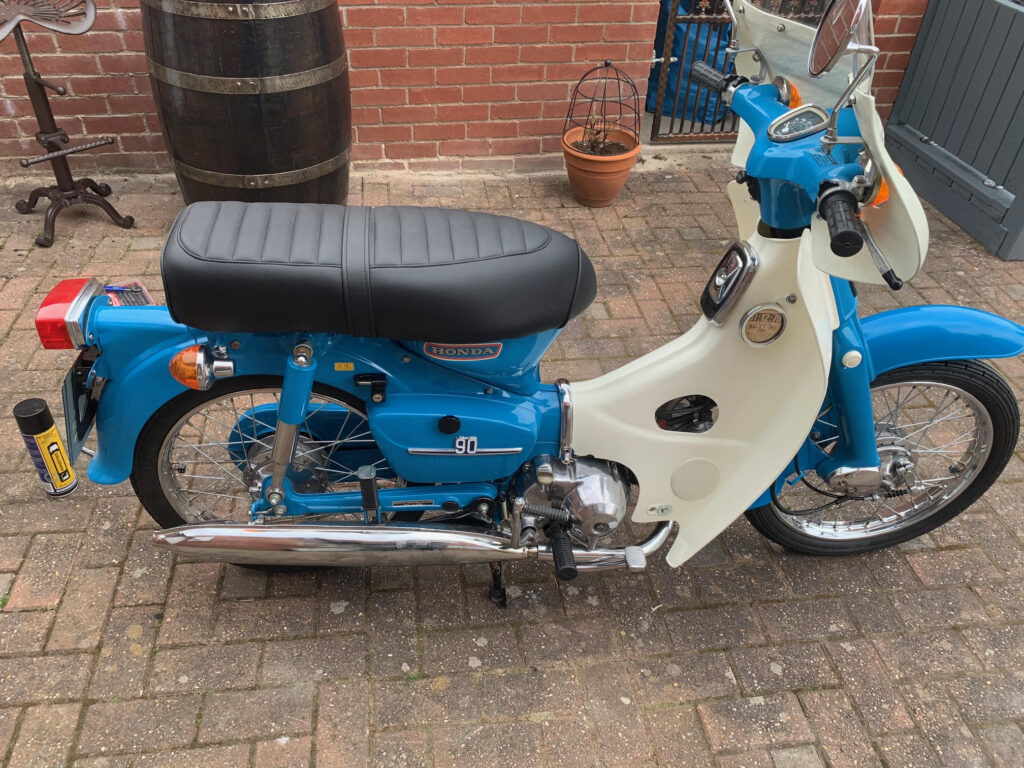
Most of our restoration experience has been built on motorbikes over 25 years in the workshop, and the same process applies to classic car panels and period commercial vehicles that come in for the same standard of work.
- Full classic motorbike restorations, tanks, fairings and frame paintwork
- Period correct colour builds where the original code is discontinued or unknown
- Classic car panel and full body restoration paintwork
- Race paint and period livery reproduction on motorbike bodywork
- Two tone and pinstripe work typical of older vehicles
- Rechroming referrals and coordination where a restoration needs work we do not do ourselves
How We Build the Finish Back Up
Every restoration panel is different, but the table below is the range of conditions we typically find and how the preparation changes with each one. Nothing here overrides what the product data sheet says for the specific primer, filler or clear in use on the day.
The starting point is always an honest assessment. We tell you what we found under the old finish before we commit you to a course of work.
| Condition found | Preparation | Coating build | What the owner should know |
|---|---|---|---|
| Sound original paint, faded but intact | Flatted back and checked for stability rather than stripped, provided nothing underneath is lifting. | Primer sealer where needed, colour rebuilt to the period shade, then clear or period correct finish. | The least invasive option and usually the most cost effective way to bring a tired finish back. |
| Old paint over old filler of unknown age | Stripped back to bare metal so the filler underneath can be inspected properly rather than painted over blind. | New filler shaped and flatted, primer filler, then the colour build appropriate to the era. | This is where restoration budgets usually move, because what is under old filler cannot be judged from outside. |
| Surface rust on steel panels | Ground or media blasted back to clean metal, with the true extent of the corrosion assessed once it is exposed. | Etch or epoxy primer applied the same day the metal is exposed, to stop fresh surface rust starting under the repair. | Our paintwork warranty does not extend to rust unless the panel is replaced or welded, which is a real consideration on an older shell. |
| Tank and fairing bodywork on classic motorbikes | Checked for old fuel staining and pinholing before any colour goes on, since fuel contamination shows through fresh paint. | Sealed appropriately for the substrate, then colour and clear built to match the panel set as a group. | Panels are judged together, not individually, because a restored bike is seen as a whole vehicle side by side. |
| Chrome trim and brightwork surrounds | Masked carefully rather than removed where trim is original and fragile, to avoid damage during the paint process. | Colour taken up to a clean line against the trim, protected through cure. | Where trim needs rechroming rather than just protecting, we can point you towards someone who does that work. |
| Previously repainted panel in the wrong shade | Stripped back to establish the true original colour where a hidden panel or reference sample survives. | Colour rebuilt from the corrected reference on our own Lechler equipment, not from the incorrect repaint. | Worth confirming before a full restoration starts, since repainting the whole vehicle in the wrong shade twice is an avoidable cost. |
How a Restoration Job Runs From Start to Finish
Restoration work moves at the pace the vehicle needs, but the sequence below is consistent across the jobs we take on.
Assess the whole vehicle first
Before any panel is touched, we look over the vehicle as a whole and tell the owner honestly what condition it is really in underneath the existing finish.
Establish the colour
We work from a paint code where one exists, from a hidden original panel, or from a reference the owner supplies, and confirm it before committing to a full mix.
Strip or flat back, panel by panel
Depending on condition, panels are either stripped to bare material or flatted back, with the decision made per panel rather than applied blanket across the whole vehicle.
Deal with what is found underneath
Old filler, surface rust or previous repairs are addressed as they come up, with the owner kept informed if the scope changes from what was first agreed.
Prime and build
Etch or epoxy primer, filler where needed, and a primer filler build appropriate to the panel and the era of the vehicle.
Mix and lay the period colour
Colour is mixed on our Lechler scheme against the confirmed reference and applied in controlled coats.
Detail work: two tones, pinstripes and livery
Where the vehicle calls for it, tone splits, pinstripes or period livery are laid out and masked before the finishing coats go on.
Cure and finish
The finish is cured fully before handling, then checked as a full panel set rather than panel by panel, since a restoration is judged as one vehicle.
One of Doncaster's Main Motorcycle Restoration Workshops
We have been working on classic and race motorbikes in Doncaster for 25 years, with 20 years specifically in motorbike paintwork and race paint. That experience in period correct colour and detail work carries directly across into classic car restoration paintwork.
What Restoration Paintwork Can and Cannot Promise
Restoration work involves more unknowns than a standard repair, so we set expectations honestly at the quote stage rather than after the vehicle is stripped down.
Well suited to restoration paintwork
- Classic motorbikes needing full or partial repaint to period correct colours
- Classic cars where the panels are sound enough to restore rather than replace
- Vehicles with a known paint code or a surviving reference for the original shade
- Race paint and period livery reproduction on motorbike bodywork
- Vehicles where the owner wants an honest condition assessment before committing to full restoration
Where we will flag a limitation
- Structural corrosion serious enough that panels need replacing or welding rather than painting over
- Rust. Our paintwork warranty does not extend to rust unless the panel is replaced or welded
- Rechroming and brightwork replating, which we do not do ourselves but can point you towards
- A fixed turnaround date on a full restoration, since scope often changes once panels are stripped
- Any colour promise made from a description or an old photograph rather than a code, panel or sample checked in person
Classic Restoration Questions
Do you work on classic cars as well as motorbikes?
Yes. Most of our 25 years of restoration experience has been built on classic motorbikes, and we bring the same process and standards to classic car panel and full body restoration paintwork.
What if there is no paint code for my vehicle's original colour?
We work from a hidden original panel where one has survived, such as inside a door shut or under a trim piece, or from a reference sample you provide. The colour is then built on our own Lechler equipment from that reference.
How do you know what condition the panels are really in?
We flat back or strip each panel and assess it individually rather than judging the whole vehicle from the outside. Old filler and surface rust are often only visible once the existing finish comes off.
Will the restoration cost change once you start?
It can, because what is under old paint or old filler cannot always be judged from outside. We keep owners informed if the scope changes and explain why before any extra work is carried out.
Do you do rechroming as part of a restoration?
No, rechroming and brightwork replating are not services we offer directly, but we are happy to point you towards someone who does that work as part of coordinating a full restoration.
Can you match paint on a motorbike tank with fuel staining underneath?
We check for fuel staining and pinholing before any colour goes on, because contamination in the substrate can show through fresh paint if it is not dealt with first.
How long does a full restoration take?
It depends on the condition found once the vehicle is stripped down and how much of the bodywork needs rebuilding. We agree a realistic timescale with the owner rather than fixing one before we have seen what is underneath.
Is restoration paintwork covered by the same warranty?
We give a 6 year warranty on all paintwork, as well as a lifetime warranty on any plastic welding we perform. We cannot give warranty against rust unless the panel is replaced or welded, which matters more on an older shell.
Can you reproduce a period race livery?
Yes, this is part of our motorbike restoration work. Livery and pinstripe detail is laid out and masked before the finishing coats, using period references where they are available.
What happens if surface rust is found during a restoration?
Affected areas are ground or media blasted back to clean metal and primed the same day to stop fresh surface rust starting under the repair. Anything beyond surface rust, such as corrosion through a panel, is flagged separately.
Do I need to bring the vehicle in for a quote?
For restoration work, yes. Condition, colour and scope all need to be assessed in person, so an accurate quote depends on us seeing the actual vehicle at our Doncaster workshop rather than working from photographs.
Can you match a colour from an old photograph?
Not reliably. Photographs change colour under different light and cameras, so we work from a paint code, a surviving hidden panel or a physical reference sample rather than a picture.
Related Paintwork
Bring the Vehicle In for an Honest Assessment
Restoration paintwork starts with an honest look at what is really under the existing finish. Bring the vehicle to the workshop at Balby Carr Bank and we will talk you through condition, colour and a realistic plan.
We look after customers across Doncaster, Mexborough, Rotherham, Barnsley, Worksop and the wider South Yorkshire area.