Colour Matching and Paint Mixing in Doncaster
Almost every complaint about a body repair comes down to one thing: the repaired panel does not quite match the ones beside it. We mix our own paint on site using our Lechler scheme, and we check the mix against your car before any of it reaches the vehicle.
A Paint Code Is a Starting Point, Not an Answer
The code on your VIN plate tells us what the factory sprayed. It does not tell us what is on your car today. Manufacturers issue several variants of the same code across production runs and plants, and after a few years of sun, road salt and washing, the panel in front of us has moved away from all of them. Silvers and metallic greys drift the most, reds fade the fastest, and a solid white can pick up a yellow cast that is invisible until you park a fresh white panel next to it.
That is why we mix in the workshop rather than buying a tin in. We have the Lechler scheme on site, so we can pull a formula, adjust it, and test it against your actual panel in a few minutes instead of ordering another batch and waiting.
The result you should expect is not a panel that measures identical on a spectrophotometer. It is a car that reads as one colour from every angle a person is ever going to look at it from. Those are different targets, and the second one is the one that matters when the car is back on your drive.
Where Colour Matching Does the Heavy Lifting
Colour matching is not a service you usually buy on its own. It sits underneath every other job in the workshop, and it is the part that decides whether the repair is invisible or obvious.
- Single panel repairs where a new colour has to sit against ten year old paint
- Bumper and plastic repairs, where the same formula lays down differently on flexible plastic than on steel
- Full and partial resprays, including complete colour changes
- Classic and period work, where the original shade is no longer a current formula
- Motorbike tanks, fairings and panels that have to match across several separate parts
- Two-tone and custom work where two mixed colours have to relate to each other, not just to the car
How the Colour Is Built, Substrate by Substrate
The same mixed colour behaves differently depending on what is under it. Bare steel, aluminium, filler, flexible plastic and existing paint all absorb, reflect and hold solvent in their own way, so the preparation below the colour is part of the match, not a separate job. The table below is how we think about that on the bench.
Exact film builds, flash times and bake schedules come from the product data sheet for the system in use on the day. Nothing here overrides what the manufacturer specifies for the material actually in the gun.
| Substrate | Preparation | Coating build | Handling |
|---|---|---|---|
| Bare steel | Sanded back to clean, dry, rust free metal and degreased. Any moisture or old sealer left behind will show up as a difference in gloss later. | Etch or epoxy primer to seal the metal, then a primer filler flatted level before colour. | Not left in bare state overnight. Primed the same day so surface rust cannot start under the repair. |
| Aluminium panels | Abraded with aluminium specific media and kept away from steel dust, which will corrode into the surface. | Dedicated primer suited to aluminium, then the same colour and clear build as steel. | Handled with clean gloves. Fingerprints on prepared aluminium can telegraph through the colour. |
| Body filler | Shaped, guide coated and flatted until the guide coat is gone. Filler that is not fully flat will read as a wave once gloss goes over it. | Primer filler to seal the repair, flatted again, then sealer so the filler cannot pull solvent out of the colour. | Left to cure fully before primer. Filler that is still gassing off is the most common cause of a repair sinking weeks later. |
| Flexible plastic bumpers and trims | Cleaned of release agents and silicone, keyed, and treated with plastic primer or adhesion promoter. | Colour is often mixed with a flex additive so the film moves with the panel rather than cracking. | Given longer before refit than a steel panel of the same size, because the film has to cure through as well as touch dry. |
| Sound existing paint | Flatted and cleaned rather than stripped, provided the existing film is stable and not lifting. | Colour blended out into the adjacent panel and the clear carried to a natural break line. | Polished only once the clear has hardened enough to take a machine without marring. |
| Bare or previously stripped plastic fairings | Degreased, keyed and checked for previous repairs, which will show as a different absorption rate. | Plastic primer, then the colour, then a full clear rather than a spot repair wherever the part allows. | Kept off the bike until the clear is hard. Fairing fixings pull down onto soft clear and leave a permanent print. |
How We Get the Colour Right Before It Goes on Your Car
The order below is the whole point. Every step happens before any colour touches the vehicle, which is why we can commit to the match rather than hoping.
Read the car, not just the plate
We take the paint code from the vehicle, then look at the actual panels. Roof and bonnet get more sun than doors, so a car can genuinely be two shades of the same colour before we start.
Pull the formula and the variants
Our Lechler scheme will usually offer several variants against one code. We narrow them down against the panel rather than accepting the first one on the list.
Spray a test card
The candidate mix goes onto a spray-out card at the same gun setting, film build and clear as the real job. Colour judged wet, or judged without clear over it, is not colour you can trust.
Check it on the car, in daylight
The card is held against the panel and viewed straight on and at an angle. Metallics in particular can match head on and be clearly wrong at forty five degrees.
Adjust the mix
If it is close but not right, we tint the mix and card it again. This is the step that gets skipped when a shop is buying paint in rather than mixing it, and it is the reason repairs stand out.
Plan the blend
Even a perfect mix is usually blended out into the neighbouring panel and taken to a natural break line, so the eye never gets a hard edge to catch on.
Spray, clear and cure
Colour goes down in controlled coats, then the clear over the blend area. The panel is cured before anything is refitted or handled.
Final check against the rest of the car
The vehicle is looked over as a whole, outside the booth, before it is signed off. With over 40 years of experience behind the bench we do not let a car leave until we are confident a vehicle inspector would not pick the repair out.
We Mix All Our Own Paint On Site
Because the scheme is in our building, a colour that needs adjusting gets adjusted the same day. If there is a slight discrepancy against your vehicle, we have the equipment here to move the mix until there is not.
What We Can Match, and What We Will Tell You Honestly
There are jobs where the honest answer changes the plan. We would rather have that conversation at the quote stage than after the car is in the booth.
Well suited to matching
- Solid, metallic and pearl factory colours across cars, vans and motorcycles
- Repairs where the surrounding paint is original and structurally sound
- Period correct colours for classic and restoration work
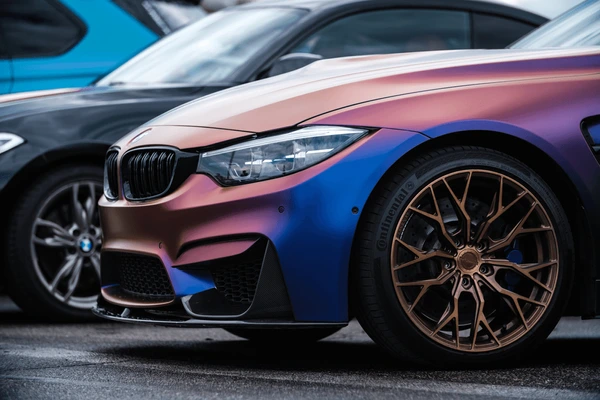
- Candies, chromatics and flip pearlescent finishes on bike panels
- Colour changes, where the whole visible shell is going one new colour anyway
Where we will flag a limitation
- Wheels. We recommend wheels go elsewhere for powder coating, as we do not offer sandblasting or acid dipping
- Panels where the existing paint is already lifting or delaminating, which needs stripping back rather than matching
- Very heavily faded single panels, where blending into the neighbouring panel is the only honest route to an invisible finish
- Rust. Our paintwork warranty does not extend to rust unless the panel is replaced or welded
- Any colour promise made over the phone. A match is judged against your car, in daylight, not from a description
Colour Matching Questions
Will the colour match?
We mix all our own paint on site using our Lechler paint scheme. Even if there is a slight colour discrepancy, we have the equipment to adjust the colour to match your vehicle before it goes anywhere near the car.
Why can two cars with the same paint code look different?
Manufacturers release variants of the same code across different production runs and plants, and paint then changes on the car with sun, washing and age. That is why we match against your actual panel rather than trusting the code alone.
What is a spray-out card and why does it matter?
It is a test panel sprayed with the candidate mix at the same gun setting, film build and clear coat as the real job. Judging colour wet, or without clear over it, gives a false reading, so the card is the only fair comparison.
Do you have to paint the whole panel to get a match?
Not always, but we will usually blend the colour out into the adjacent panel and carry the clear to a natural break line. That removes the hard edge that makes a repair visible even when the mix itself is correct.
Can you match a colour if there is no paint code on the car?
Often yes. Bring the vehicle to the workshop and we will work from the panel itself, spraying and adjusting test cards until we have a mix that reads correctly in daylight.
Will you be able to tell afterwards?
With over 40 years of experience we pride ourselves on our repairs and do not allow a vehicle to leave until we are confident it would not be detected by a vehicle inspector.
Do metallics and pearls take longer to match?
They take more checking. Metallic and pearl colours change appearance with viewing angle, so the card gets looked at straight on and off to one side before we commit. Solid colours are usually quicker to settle.
How long should I wait to wash my vehicle afterwards?
We recommend waiting at least two weeks before washing your vehicle. That gives the clear coat time to harden so washing does not put fine scratches into fresh paint.
Is there any warranty on the paintwork?
We give a 6 year warranty on all paintwork, as well as a lifetime warranty on any plastic welding we perform. We cannot give warranty against rust unless the panel is replaced or welded.
Can you match paint on a motorbike tank or fairing?
Yes. We have been one of Doncaster's main motorcycle repair shops for 25 years and have 20 years of experience in motorbike paintwork and race paint, including candies, chromatics and flip pearlescents across multiple separate panels.
Do you paint wheels to match?
We recommend wheels go elsewhere for powder coating, as we do not offer sandblasting or acid dipping options. We are happy to point you in the right direction.
How much does colour matching add to a repair?
It is part of the repair rather than a separate line. We cannot give a standard price because it depends on the colour, the panel and the condition of the surrounding paint, so the best option is to bring the vehicle to our workshop in Doncaster for an accurate in person quote.
Where the Colour Ends Up
Bring the Car, Not a Photograph
Colour cannot be quoted from a picture on a phone. Bring the vehicle to the workshop at Balby Carr Bank and we will look at the panel in daylight, tell you what the match will involve, and give you an accurate price for the whole repair.
We look after customers across Doncaster, Mexborough, Rotherham, Barnsley, Worksop and the wider South Yorkshire area.