
Stone Chip and Bumper Scuff Repair in Doncaster
Most of the damage that comes through the door is not a big job. A car park scuff, a kerbed bumper corner or a scatter of stone chips off a motorway journey does not need a full respray, it needs the right small repair, matched properly and blended so nobody can tell where it happened.
Why a Small Repair Still Needs the Full Process
It is tempting to think a scuff or a chip is quick because the damage itself is small. The size of the damage does not change the number of steps needed to make a repair invisible. The paint still has to be matched against your actual panel, the surrounding area still has to be prepared properly, and the edge of the repair still has to be blended out so there is no visible line where new paint meets old.
What does change with a smaller repair is the scope. We are not stripping a whole panel or a whole bumper, we are working a contained area and feathering the edges into sound paint around it, which keeps the job quicker and more affordable without cutting any corners on the process itself.
The most common complaint about cheap scuff repairs is a visible patch, either a colour mismatch or a hard edge you can see under certain light. Both of those come from skipping steps, not from the size of the job.
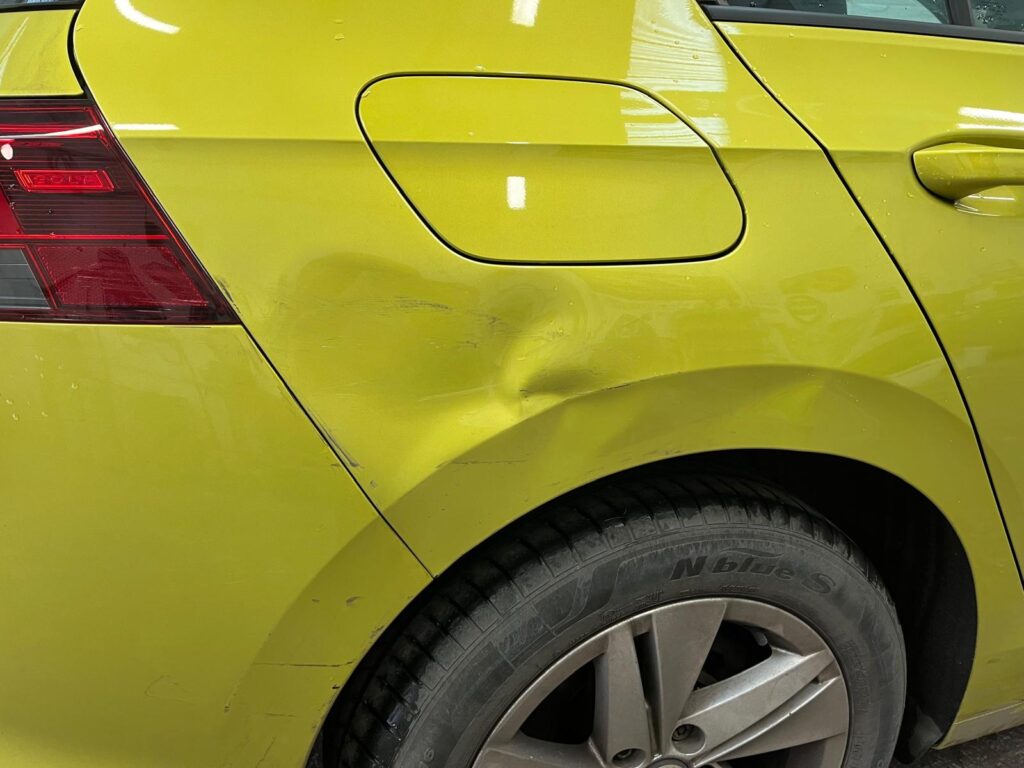
The Small Jobs We Fix Every Week
This is the day to day work of the workshop as much as the bigger jobs, and it gets the same standard of colour matching and finishing.
- Car park and trolley scuffs on doors, wings and quarter panels
- Kerbed bumper corners, typically the front corner from tight parking
- Stone chips picked up on motorway and dual carriageway journeys
- Scrapes from hedges, gateposts or narrow driveways
- Light scratches through the clear that have not gone into the metal
- Bumper scuffs from reversing into a low object such as a bollard or trailer
How We Match the Repair Area to the Rest of the Panel
The substrate under a small scuff is usually plastic bumper, and under a stone chip is usually painted steel, and those two behave differently enough that the preparation has to match the material, not just the size of the damage.
Film builds and flash times follow the product data sheet for the system in use on the day.
| Damage type | Preparation | Repair build | Blend and finish |
|---|---|---|---|
| Bumper scuff, cosmetic only, no crack | Cleaned of dirt and any transferred material, then keyed with appropriate abrasive for the plastic type. | Plastic primer or adhesion promoter, colour mixed with flex additive so the film moves with the bumper. | Blended into the surrounding bumper area with clear feathered well past the repair edge. |
| Bumper scuff with a crack or split | Assessed for whether the crack can be repaired before any paint work is planned. | Plastic repair to the crack first, then primed and colour matched as above once the structural fix is sound. | Finished to the same standard as a cosmetic scuff once the underlying repair is confirmed stable. |
| Single stone chip through to bare metal | Cleaned out and checked that no rust has started in the exposed metal before proceeding. | Primer to seal the exposed point, then colour built up in the chip and blended into the surrounding film. | Machine polished once cured so the small repair sits level with the surrounding clear. |
| Scatter of multiple stone chips, one panel | Each chip checked individually rather than treated as one area, since chips vary in depth. | Primed and colour matched per chip, or as a light panel blend where chips are dense across the surface. | Blended across the panel so individual repair points do not read as a pattern of spots. |
| Light scratch through clear only, not into colour | Assessed to confirm the scratch has not gone through to bare colour or metal. | Often correctable by machine polishing and cutting the clear rather than a full colour repair. | The cheaper option when the scratch genuinely has not broken through, confirmed before quoting. |
| Kerbed bumper corner with material loss | Cleaned and shaped where plastic has been physically lost or deformed at the corner. | Filler suited to flexible plastic, primed, then colour and clear built up to restore the original profile. | Blended around the corner in both directions so the repaired shape reads correctly from any angle. |
How We Handle a Scuff or Stone Chip Repair
The steps are the same discipline as a bigger job, scaled to a contained area.
Check the actual depth of the damage
We look at whether the damage is in the clear only, through to colour, or through to bare metal or plastic, because that decides the whole repair plan.
Confirm the colour against the panel
Even for a small repair, the mix is checked against the actual panel in daylight rather than assumed from the paint code alone.
Prepare the contained area
The repair zone is cleaned, keyed or primed as the substrate requires, without disturbing sound paint outside the working area unnecessarily.
Build the repair
Filler where there is material loss, primer to seal, then colour applied to the damaged area only.
Blend the edges
Colour and clear are feathered well past the repair boundary so there is no hard edge for the eye to catch.
Cure
The repair is left to cure properly before any polishing, even on a small job, because rushing this step is what causes a visible ring around the repair later.
Machine polish and check
The area is cut and polished to bring the blend level with the surrounding original finish, then checked outside in daylight.
We Do Not Cut Corners Because the Damage Is Small
A scuff or chip repair uses the same Lechler mixed colour and the same blending process as a full panel job. The only thing that changes is how much of the car we are working on.
What a Small Repair Can Fix, and When It Cannot
Most cosmetic damage is a straightforward job, but there are situations where a contained repair is not the honest answer.
Well suited to a contained repair
- Cosmetic scuffs and scrapes with no crack in the plastic
- Single or scattered stone chips confirmed not to have started rusting
- Light clear coat scratches that have not gone through to colour
- Kerbed bumper corners with material loss but no structural crack
- Chips and scuffs caught early, before any corrosion has had time to start
Where we will recommend more work
- A stone chip that has already started rusting underneath, which needs treating before it is painted over
- A bumper crack severe enough to affect fitment, which needs structural repair before cosmetic work
- Damage spread across multiple panels, where a full panel or vehicle respray is the more sensible option
- Rust found during preparation. Our paintwork warranty does not extend to rust unless the panel is replaced or welded
- A colour match agreed over the phone rather than checked against the panel in person
Stone Chip and Scuff Questions
Do you repair small scuffs or only full panels?
Small, contained repairs are a large part of what we do day to day. A car park scuff or a kerbed bumper corner does not need a full respray, and we work the contained area with the same colour matching and blending process as a bigger job.
Will you be able to see where the repair was done?
We mix all our own paint on site using our Lechler scheme and blend the colour and clear well past the repair edge, so there should be no visible line or patch once it is finished.
Is a stone chip serious if it is only small?
It can be, if it has gone through to bare metal, because that exposes the panel to rust. We check the depth of every chip before repairing it and confirm no corrosion has started underneath.
Can you fix a kerbed bumper corner without replacing the bumper?
Usually yes, provided there is no structural crack affecting the fitment. We repair the material loss with filler suited to flexible plastic, then colour and clear to restore the original profile.
How do you match the colour for such a small area?
The same way as a bigger job. We check the mix against your actual panel in daylight before it goes anywhere near the car, even for a repair the size of a stone chip.
Is a light scratch always a paint job?
Not always. If the scratch has not gone through the clear coat into the colour, machine polishing can often correct it, which is cheaper than a colour repair. We check this before quoting either way.
How much does a scuff or chip repair cost?
It depends on the substrate, the number of chips and the size of the scuffed area, so we cannot give a fixed price without seeing it. Bring the vehicle to our Doncaster workshop for an accurate quote.
How long does a small repair take?
Shorter than a full panel or respray, but the paint still needs to cure properly before polishing, so it is not an instant job. We will give you a realistic timescale when you bring the vehicle in.
Is there a warranty on small repairs?
We give a 6 year warranty on all paintwork, as well as a lifetime warranty on any plastic welding we perform. We cannot give warranty against rust unless the panel is replaced or welded.
Should I get a stone chip fixed straight away?
Yes, ideally. A chip that has broken through to bare metal can start rusting underneath the paint, and catching it early keeps the repair small and straightforward rather than letting corrosion spread.
What if I have several stone chips across one panel?
We check each one individually for depth, then either repair them as separate points or blend the panel more broadly if the chips are dense enough that individual spot repairs would look patchy.
How soon can I wash the car after a small repair?
We recommend waiting at least two weeks before washing, the same as any fresh paintwork, so the clear coat has time to harden and does not pick up fine scratches from washing too soon.
Related Repair Work
Small Job, Same Attention to Detail
Bring the vehicle to the workshop at Balby Carr Bank and we will look at the scuff or chip in daylight, tell you honestly what it needs, and give you an accurate price for a repair that will not stand out.
We look after customers across Doncaster, Mexborough, Rotherham, Barnsley, Worksop and the wider South Yorkshire area.